I create from my body, the margins, and life’s fault lines: places where survival demands both tenderness and rebellion. My plays grow out of the marrow of my lived life — as a daughter, musician, mother, and survivor — from years of illness that taught me what a body will bargain away to keep going. I'm not interested in explaining everything or telling people how to feel. Instead, I press on the bruise inside my characters, turn them over, and invite the audience to sit in the tension, and sometimes contradictions, with me.
I'm drawn to women who refuse the names the world gives them, enduring the limits of that refusal, and to women who withhold an accounting of themselves and circumstance force reconciliation. Those names come from outside, but they run deep; there is no clean self underneath, shielded from that pain, waiting to be uncovered. So my characters negotiate. They comply. They sometimes know they are complying, yet calling it something else. They accommodate, take the smaller room, agree to be called something they are not, because refusal costs more than they have to give — or more than they are prepared to lose. And then, at the hour they choose, they stop. That stopping may come late, and it may not last, or may be quiet enough to miss. They know it in their bodies before we know it in language.
With an ear for music from my work as a musician, and a sensitivity to silence, I write plays that hold their people in one place and make them do their work in front of each other. Nothing is resolved offstage. The ideas live in transaction rather than in argument, and what begins as private becomes public by the end. I am interested in the slow build of a voice that can't be easily dismissed, and in theatricality as a way to surface what can't yet be said. I want my plays to loosen what has hardened in myself and others, and to remind people they are not alone in their most difficult moments.
I envision a theatre rooted in vulnerability, rigor, and collaboration: rooms that honor process as much as product, where art becomes a tool for reckoning, restoration, and reimagining. I want to work with artists unafraid of risk, who value honesty over polish, and see theatre as a live argument with the world outside. For me, theatre is where we face what’s hard, repair what we can, and dream out loud about what might be imaginable.
About
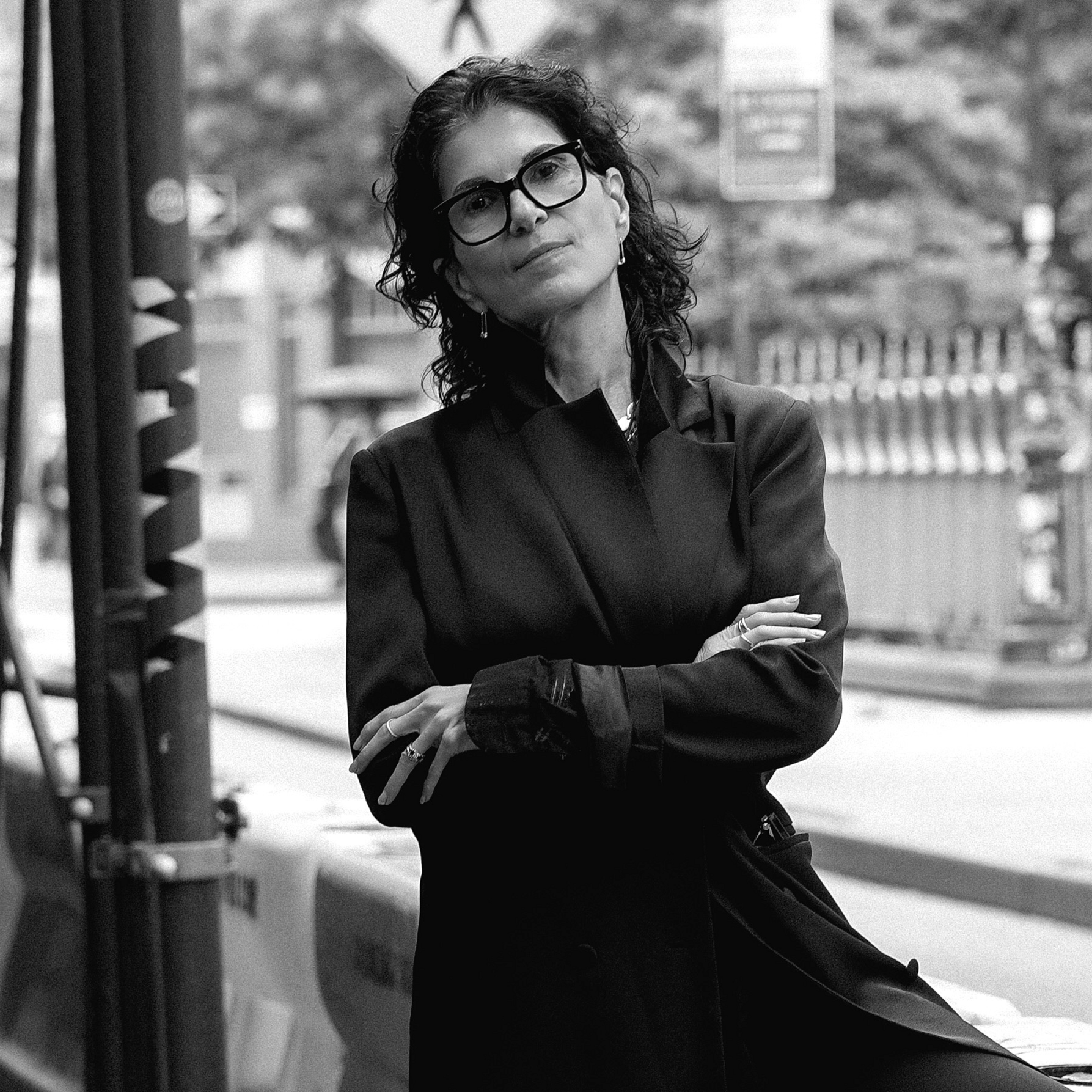
BIO
Photography by Sima Jafari
I hold space for those silenced or erased.
I write to remember them.
I write to imagine otherwise.
D-Davis is a neurodivergent, genderfluid playwright who writes to implicate rather than console, leaving room to debate, to rage, to hope, and to imagine a world both softer and more ferocious than the one her characters entered. She was a finalist for Cry Havoc Theater Company. Her play, A Meditation on Hope was a semifinalist for the O’Neil Conference and the Terrence McNally Incubator, and her play Broken Thread was a semifinalist for Premiere Stages, Road Theatre, Bronx Creative Vision Award and a Workshop Theatre Intensive, and is being published by Next Stage Press (November 2026). She received an DQT American Woman Fellowship (Grrls Play Bass) and HB Studio Residency Fellowship (Complicity). Her most recent self produced workshops are Broken Thread (Femme Collective), and Complicity (New Ohio), and one-act plays Erasing Time, (The Chain, short-listed SPF-16, Night Becomes Morning (Chain Theatre), Memorial Tree, (Columbia University, pub. Pitkin Review, 2022), and What’s What (Polaris Theater). D has work with PlayPenn, Primary Stages, New York Theater Workshop, Workshop Theatre, Theatre East, the Actors Studio, AMIOS–Project 42, Howl Playwrights, Jose Rivera Writers Collective, Goddard College and Columbia University. She earned a BA in Theater at Bennington College, an MA in History at CUNY, granted two NEH research fellowships (Feminism and Philosophy), and earned an MFA in playwriting at Columbia University. She is the Co-Artistic Director of Eden Theater Company with her daughter, and currently works as the Literary Associate for The Tent Theater Company. www.d-davis.com

“There is a vitality, a life force, an energy, a quickening that is translated through you into action, and because there is only one of you in all of time, this expression is unique. And if you block it, it will never exist through any other medium and it will be lost.”
— Martha Graham